

 A gift of the International Eucharistic Congress is that no matter who or where you are, the Congress is for you, and everyone.
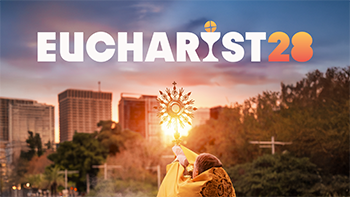
The announcement that the Archdiocese of Sydney will host the 2028 International Eucharistic Congress was made more than a year ago. Now, two years out from the gathering, the People of God are invited to begin their journey to this encounter and beyond.
Events have become a critical element of Catholic evangelisation and our experience as a universal Church. Festivals, conferences and pilgrimages, for families, young people, children, ordained and laity; there is often a place where you can gather with your people. Gathering is a part of our faith tradition, after all, Jesus said, “For where two or three are gathered together in my name, I am there in their midst” (Matthew 18:20).
In Australia, many of our conferences, networks and gatherings are focused on your ministry role or leadership responsibilities, or even what demographic you fit into. If you’re not in leadership or a ministry role, is it worth attending? If so, is it valuable enough to take time off work, away from family, or the financial impact? If we do attend, are we nourished, or are we asked to take on more responsibility or implement new approaches? Many of our Church gatherings ask us to do more, but how many ask us to be still, present and nourish us?
The International Eucharistic Congress in Sydney 2028 offers the potential to change how we gather, encounter and live as the Church in Australia.
Encounter. At the centre of the Congress is the invitation to encounter and be with Christ. Encounter and being present in the celebration of the Eucharist, prayer and sacraments are also central, but so is our encounter with Jesus through the People of God we meet. More of a synodal experience than conference, the Congress will feature significant elements often found in retreats and pilgrimages, focusing on our relationship with Christ and each other.
For you, and for many. Like the invitation to the Eucharist, the invitation to be a part of the Congress is ‘for you, and for many’. All Catholics are equal in baptism, and all are invited to come to the encounter. For decades now the Church has gathered in large experiences, and there are many adults who draw upon these experiences from their youth and community life, but it hasn’t been available for everyone. These experiences offer moments to inspire your spiritual journey and the opportunity is now available for everyone, not matter your position, ability, culture or demographic.
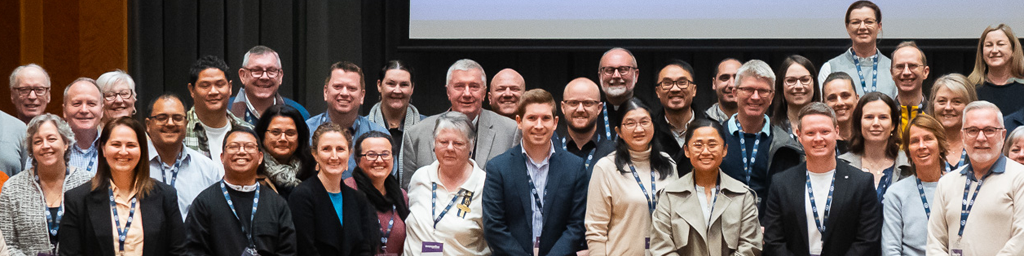
Universal and intergenerational. The Congress will bring together all ages, experiences, roles and cultures that exist within the universal Church. It will offer an intergenerational experience we have not seen in the Church in Australia for decades. While this will be a challenge for organisers and participants, the graces which may flow could dynamically shift our efforts, ministries and Church structures in Australia.
The best example of these elements and impact is of course World Youth Day in Sydney 2008. The impact of WYD08 was one of the most significant the Church in Australia has ever seen. It provided common encounter, experience, language, formation and leadership. It changed ministry with young people immediately and the decades that followed. It achieved all this and it was predominately for young people. Imagine what could be experienced if everyone in the Church and beyond was invited.
The journey we are setting out on will be filled with local initiatives and experiences which prepare us for the Congress. Each occasion offers personal encounter, witness and mission. Some may be private, and others may be public; some joyful, some challenging. Each experience is a whisper from the Holy Spirit, and perhaps over the coming years these whispers turn into a conversation; a conversation which helps you grow in love for Jesus and in how you live for Him.
You can learn more about the International Eucharistic Congress in Sydney 2028 at their website and via their social media (@Eucharist28).
Image: IEC 2028
Words: Malcolm Hart