

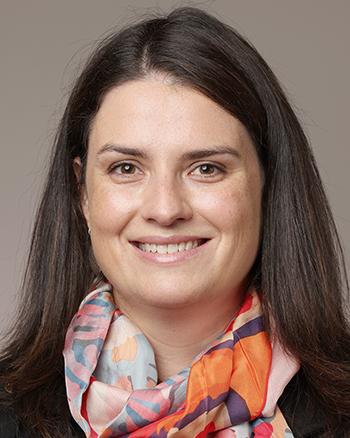
 Artificial intelligence (AI) technologies present humanity with a choice between upholding or eroding human dignity, according to Catholic academic Dr Lorenn Ruster.
Dr Ruster, whose PhD at the Australian National University’s School of Cybernetics focused on responsible AI practices, has spent years researching and demonstrating what a dignity-centred approach in AI design looks like in practice.
She says people of faith need to be aware of some of the challenges that AI presents to human dignity.
“AI sycophancy is where, essentially, these AI tools flatter you, they tell you what you want to hear, they reinforce your existing views, and as a result you think you're great all the time,” she explains.
“From a dignity perspective, over time that can really violate the dignity associated with being in relationship with others, because you’d prefer to hear from ChatGPT rather than a friend or family member who may not always agree with you.
“Another example would be what's called cognitive offloading, which is essentially when we outsource part of our thinking to large language models, so to ChatGPT, Claude, Gemini or Copilot.
“In some cases, people are not just offloading a specific cognitive task, but there's also signs of people starting to outsource their whole belief systems to these tools. That's really quite worrying and quite a challenge to dignity associated with your agency.”
As part of her PhD, Dr Ruster developed a framework called the ‘Dignity Lens’, which helps organisations reflect on how they are upholding dignity in their decision-making while building, deploying, monitoring and governing AI technologies.
With her focus on highlighting the importance and benefits of proactively working to promote human dignity, Dr Ruster says Pope Leo XIV’s recent encyclical, Magnifica Humanitas, was a welcome addition to the discourse on ethical AI use.
“The encyclical makes it very clear… we should all be encouraged to get our hands dirty on what Pope Leo calls the construction site of our time,” she says.
“If you're a developer, make sure you're building with your own conscience intact and maintaining accountability and dignity. If you're a business owner or an employer, centre dignity, not just cost and efficiency, and think about the dignity of work.
“If you're an educator, keep the critical thinking and curiosity alive in your students. If you have young children, guard relationships in the home. For the general public, make sure you're informed, and that you're asking for transparency.”
Dr Ruster says there are several key themes that appear in Pope Leo’s encyclical.
“There’s this idea that technology and AI are not inherently good or evil, but they’re also not neutral,” she explains. “Humans have a very clear role to play in designing what these technologies look like, and we can build them to resemble the tower of Babel or the wall of Jerusalem.
“The second theme is that these technologies are often being produced to eliminate or erase human limitation. This is then driving design of technologies in a way where we focus on efficiency and productivity, and we lose the humanness in the process.
“And the third one is the idea that we can embrace technological progress, that these technologies can help us, provided we do not abandon the very essence of our humanity, namely, the capacity for relationship and love.”
While warning of the potential misuse of AI tools, there are also advantages, Dr Ruster says.
“There's a lot of opportunities in AI in the medical space,” she says. “AI can come up with new pharmaceutical compounds very quickly because of its computational power. There's a lot of opportunities for trialling new drugs as a result in the health sphere.
“And I think there's an argument that when it's used correctly, it really can help us to be creative. It can give us different points of view. It can help us do some tasks more quickly.”
The challenge is when these tools are relied upon without adequate “human discernment”, Dr Ruster says, or when the emphasis on productivity overrides human dignity.
“Efficiency, productivity, revenue and profit-making incentives are still very much driving what's going on,” she says.
“What my research is trying to show is demonstration cases of how you would specifically centre dignity… how managers who have a team of developers or how the software engineers themselves think about and take into account dignity in their decision-making.”
Dr Ruster believes most organisations developing AI tools are not considering how they can uphold human dignity. But she’s hopeful that can change in time.
“Centring dignity is not the norm in a lot of organisations,” she says. “There’s a lot of incentive structure to bypass and shortcut thinking about human dignity right now in just how the economics work.
“That's really where my research comes in. We showcase examples and show the demonstration cases so that others feel like this is possible to do.”
People of faith, Dr Ruster says, also play an important role in helping to shift society’s preoccupation with efficiency and productivity at the expense of the human person.
“We have a different kind of perspective on this,” she says. “We know we're made in the image and likeness of God, and that we have bodies that are temples of the Holy Spirit.
“We have emotions; we have noncognitive, nonrational knowledge, and we’re valued and have dignity just because we're human, not because we had to earn it. You don't have to be productive to be worthy. You are worthy just because you are human.”
Image: Supplied
Words: Matthew Biddle