


What does the Church say about artificial intelligence?
 In February 2020, the Pontifical Academy for Life held the ‘RenAIssance: For a Human-centric Artificial Intelligence’ conference in Rome, where tech giants such as IBM and Microsoft signed the Rome Call for AI Ethics – a document pledging an ethical approach to AI. In a message for the conference, Pope Francis made his first remarks about AI, saying such technologies pose “grave risks” but also have “immense potential” to “bear good fruits”.
As AI technology developed and interest in it grew exponentially, Pope Francis became an increasingly vocal proponent of the need to develop policies and regulations that would keep AI at the service of humanity.
In March 2023, he spoke on AI to a group of technology leaders, encouraging them to “make the intrinsic dignity of every man and every woman the key criterion in evaluating emerging technologies; these will prove ethically sound to the extent that they help respect that dignity and increase its expression at every level of human life”.
The Pope’s message for the 2024 World Day of Peace, released in December 2023, focussed on AI and allowed the Holy Father to more deeply explore some of his concerns regarding the use of AI technology. The message specifically addressed the potential for AI to be used in the development of autonomous weapon systems, and the challenges it poses to education, employment and communication.
Perhaps the Church’s most significant contribution to the global AI discussion came in June 2024, when Pope Francis spoke to world leaders at the G7 Summit. It was also the first time a pope had attended the G7 meeting in its 50-year history.
In his address, Pope Francis described AI as “an exciting and fearsome tool”, which, like all man-made tools, will bring about harm or benefit depending upon how it is used. “It is up to everyone to make good use of it but the onus is on politics to create the conditions for such good use to be possible and fruitful,” he told the leaders.
In response to these sustained calls for an ethical use of AI, Vatican City State developed a range of regulatory guidelines which came into effect at the beginning of 2025. The guidelines “aim to establish ethical and legal principles that place dignity and human rights at the centre, to ensure that artificial intelligence is used to promote social well-being and reduce the risk of injustice and abuse”.
The guidelines provide a glimpse into some of the risks and dangers that the Church sees in AI, listing a range of bans on the use of AI that:
- cause discrimination;
- harm individuals physically or psychologically through subliminal manipulation;
- exclude people with disabilities;
- create social inequalities;
- demean human dignity;
- violate fundamental human rights;
- compromise Vatican City State security and public order;
- encourage criminal conduct; and
- conflict with "the mission of the pope, the integrity of the Catholic Church and the proper operation" of the Vatican entities overseen by the governor's office[i].
The guidelines also specify particular rules for certain offices, such as “mandating that all texts, music, photos, audiovisual and radio content that have used AI systems and models in their creation or reproduction be labelled with the acronym AI”.
In January 2025, the Dicastery for the Doctrine of the Faith and the Dicastery for Culture and Education co-authored a doctrinal note, Antiqua et Nova, which expanded upon many of Pope Francis’ previous statements on AI. The document is a comprehensive exploration of artificial intelligence and how it is affecting, and may affect, individuals and society, especially in the moral and spiritual realms. After outlining what exactly artificial intelligence is and how it has developed over time, the doctrinal note invites parents, teachers, pastors and bishops to carefully study and learn about AI. It then explores the importance of developing ethical guidelines for the use of AI, before highlighting some of its potential benefits and risks.
In his first two addresses in May 2025 – one to the College of Cardinals and one to the international media – Pope Leo XIV briefly mentioned artificial intelligence, showing that the topic was high on his priorities. A year later, he published the encyclical letter, Magnifica Humanitas, on safeguarding the human person in the time of artificial intelligence.
Magnifica Humanitas
Published on May 15, 2025, Magnifica Humanitas provides a comprehensive exploration of the challenges and opportunities for the world that artificial intelligence presents. Divided into five chapters, Pope Leo XIV’s first encyclical encourages all people – not just the builders of new technologies – to do their part to ensure human dignity is at the centre of all decision-making.
In the introduction, Pope Leo presents readers with two opposing Biblical images – the construction of the towel of Babel and the rebuilding of the walls of Jerusalem. He says humanity has a choice between constructing Babel or rebuilding Jerusalem, “between a power that claims to dominate the heavens and a people who work together in the presence of God to rebuild the walls of fraternal coexistence,” (n. 9). Seeking profit at the expense of the person is dehumanising, the Pope argues, but by working together for the common good, we can protect the “grandeur of humanity” (n. 15).
The encyclical’s first chapter explores how the Church’s social teaching has developed over time, highlighting how the Church has accompanied humanity throughout history, offering her “own contribution to the creation of a more just and fraternal society” (n. 19). Pope Leo then dives deeper into the social doctrine of the Church in the second chapter of the encyclical, writing on the three foundations and five principles of social doctrine. These are the key criteria for discerning whether technological innovations help or hinder “individuals and peoples to become more humane and fraternal, while respecting our common home and future generations” (n. 85).
In chapter three, Pope Leo begins to examine the challenges that technological advancements present, acknowledging that “careful discernment of the anthropological vision that guides” (n. 94) technological progress is required. Because artificial intelligence cannot be considered to be “morally neutral” (n. 104), our discernment of AI tools needs to go beyond simple questions of intention and instead examine “how that system is designed and what vision of the human person and society is embedded in the data and models that guide it” (n. 104). Going deeper, Pope Leo asserts that the use of technology is not the key issue, but the “vision the underlies it” (n. 117), which is many cases can fall under narratives of transhumanism or posthumanism. Humanity, the Pope warns, “in all its grandeur and woundedness – must never be replaced or surpassed” (n. 126). Self-transcendence, renewal, elevation, re-creation and transformation can only take place through the grace of God (n. 127-128).
Chapter four is a call to “rediscover truth as a common good, to protect the dignity of work and to safeguard freedom against all forms of dependence and commercialization” (n. 131). Here, Pope Leo examines some of the practical implications that new technologies can have on society and peoples. If technology “becomes the ultimate criterion”, then human beings will be reduced to a commodity, but if technology is “integrated with a wise perspective”, it can be a tool for growth, justice and fraternity (n. 180).
In the final chapter of the encyclical, the Holy Father explores the impact of new technologies on warfare – including armed conflict as well as significant digital threats. In the face of a “culture of power” (n. 188) taking hold, the Pope writes that we are instead called to work to build a “civilization of love” (n. 185). This is a task that all people can contribute to, through their words and actions, regardless of their level of influence. “The civilization of love will not arise from a single or spectacular gesture, but from the sum total of small and steadfast acts of fidelity that serve as a bulwark against dehumanization” (n. 213).
In concluding, Pope Leo invites readers to contemplate “the grandeur of humanity” (n. 233), which can never be replicated or replaced by a machine. He encourages all people to avoid being “passive spectators of social and cultural fractures”, and instead to be “prepared to enter the construction sites of history… in order to rebuild what has collapsed and protect what is threatened” (n. 241).
Read Magnifica Humanitas here.
Implications for evangelisation
When the AI-based application ChatGPT rose to prominence in early 2023, one of the first questions people in the Church asked was ‘Will priests start using ChatGPT to write homilies?’
With its capacity to instantaneously trawl through myriads of data and information, AI could certainly be an aid to clergy in preparing their homilies. But, if used incorrectly or relied upon too heavily, it could also lead to confusion and misrepresentations of key Church teachings.
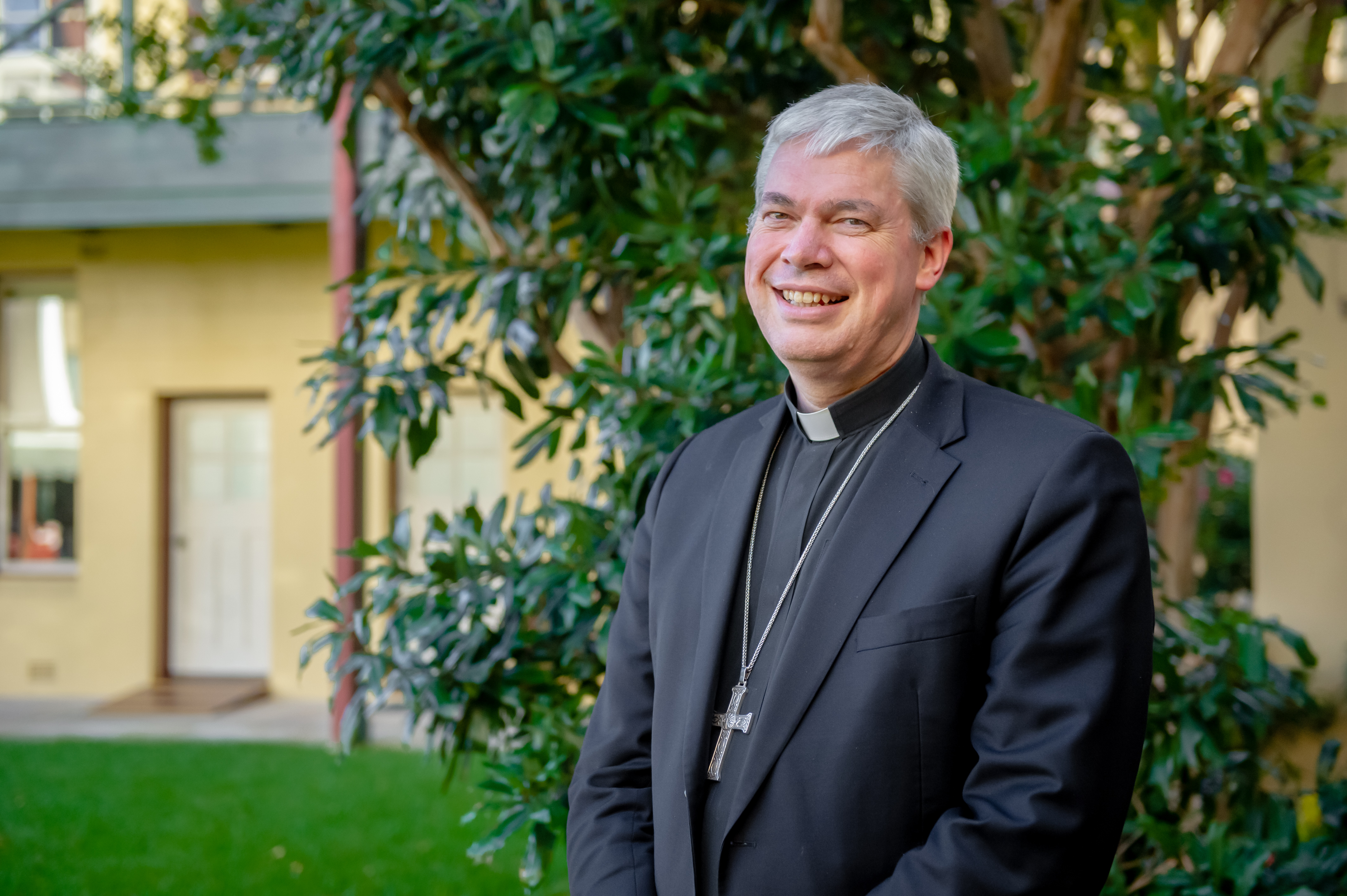 In 2024, Sydney Auxiliary Bishop Richard Umbers told the NCE: “ChatGPT is terrible for homilies; it’s OK for research. In general, it will be quite orthodox, but like anything, when you try to preach, you have to make it your own. Otherwise, you might be erudite, but you’ll be boring, and you’ll fail to move.”
This limitation of AI is noted in both Antiqua et Nova and Magnifica Humanitas, which emphasise AI’s lack of a personal touch. A machine or a computer can never fully replicate the complex workings of the human heart, and so if one were to rely upon AI-generated content for a homily, it may be intelligent but would lack the necessary emotion, sensitivity and thoughtfulness that can only be provided by a human.
That being said, AI can still have a useful role to play in the Church’s evangelising mission.
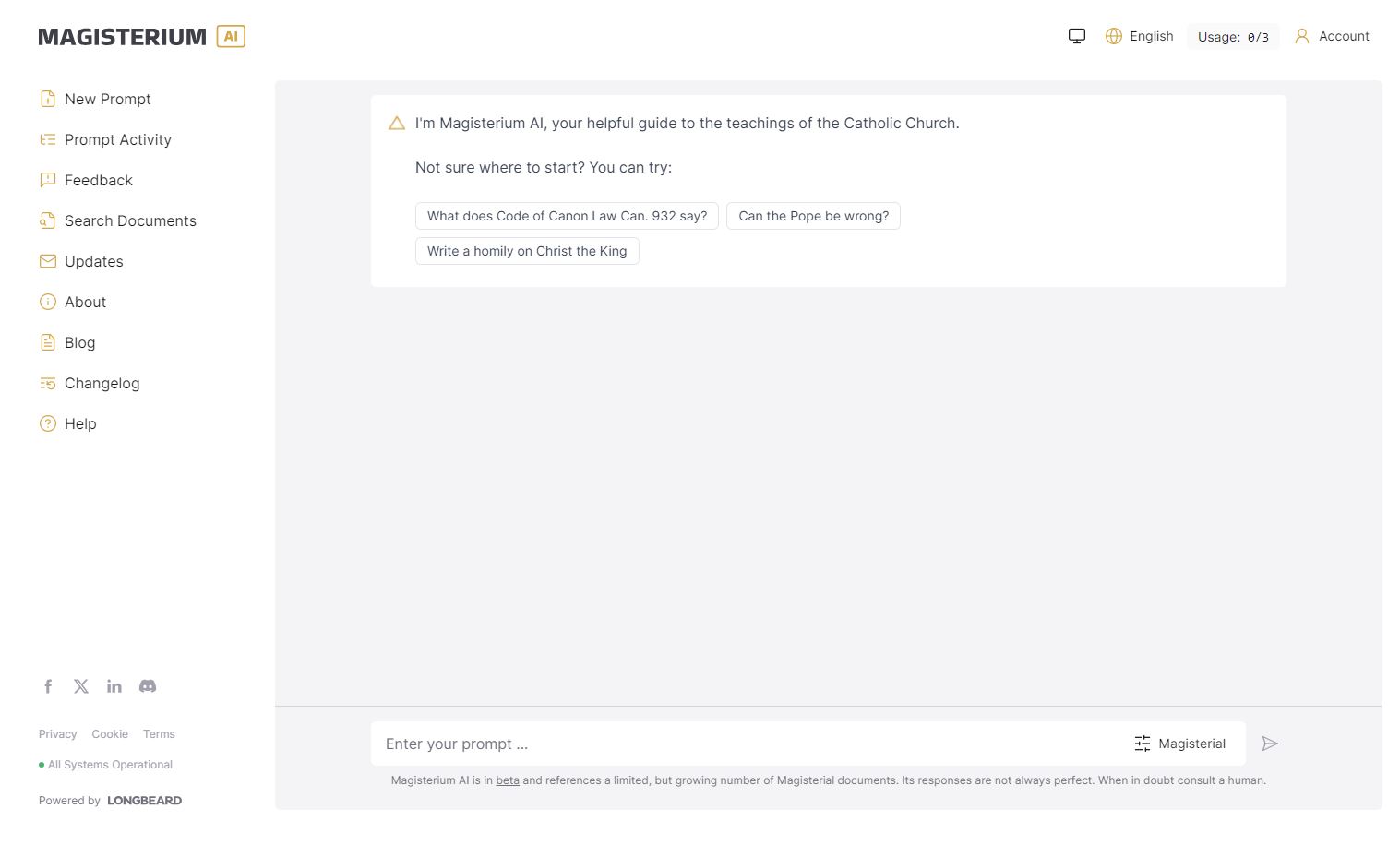 Developed in mid-2023, the US-based application Magisterium AI is a great example of how the Church can utilise the technology. It works by only using Magisterial documents (such as the Catechism, Canon Law and Papal Encyclicals) and foundational scholarly works (such as the Bible, writings of Church Fathers and Doctors of the Church) to answer questions asked by users, with its database at May 2025 including more than 26,000 documents. It is a helpful tool for both forming Catholics and informing those exploring the faith, providing responses to questions about Church teaching, ethics and morals. Answers that Magisterium AI provides to questions submitted also include clear references to the source documents, giving it much greater reliability than other AI chatbots.
According to its website, the founders of Magisterium AI are well aware that it can only be a tool for evangelisation, a part of the process rather than the complete thing:
“[Magisterium AI] is intended to aid understanding, not replace essential human elements of faith. Always prioritise engaging with the Sacraments, participating in the life of the Church, consulting knowledgeable individuals (priests, spiritual directors, teachers), and reading primary sources like the Catechism and Sacred Scripture directly. Magisterium AI should supplement, not substitute, these vital aspects of Catholic life and learning.”[ii]
So while AI technology cannot accompany a person on their faith journey, it can provide them with factual answers to their questions, and in that way, potentially fast-track an individual’s intellectual journey to the faith. The interior journey that takes place, a journey of the heart, can only occur in God’s time and with his grace. Knowledge and information may help move the intellect, but the complete journey to faith requires much more.
In this sense, then, perhaps the capacity of AI to provide information quickly will serve to do two things in the process of evangelisation:
- It will help to highlight and reinforce the fact that no journey of faith can take place via knowledge alone.
- It will help parishes and individuals to focus on their task of witnessing to their faith and accompanying seekers on their journey. Instead of spending hours preparing resources, workbooks, or information packs, sacramental coordinators may have more time to spend connecting with seekers in-person.
Like other tools of technology, AI has a great potential to be a helpful aid in the task of evangelisation, provided users are aware of its limitations and can mitigate them sufficiently.
Further Reading
Researcher seeks to embed dignity in new technologies (NCE Newsletter, August 2026)
AI Ethics: An Abrahamic commitment to the Rome Call (10 January, 2023)
Message of Pope Francis for the 57th World Day of Peace (1 January, 2024)
Message for the 58th World Day of Social Communications - Artificial Intelligence and the Wisdom of the Heart: Towards a Fully Human Communication (24 January, 2024)
Antiqua et Nova: Note on the Relationship Between Artificial Intelligence and Human Intelligence (Dicastery for the Doctrine of the Faith, Dicastery for Culture and Education, 14 January, 2025)
Cautiously hopeful: The Church on AI (NCE, 3 June, 2025)
'Preserving human voices and faces': A Discussion on the 2026 World Communications Day Theme (ACBC, 7 May, 2026)
AI: Useful Tool or Weapon of Satan? | Crooked Lines Podcast Ep. 3 (Parousia Media, 22 April, 2026)
AI in education: Balancing innovation and ethics in Australian classrooms (Catholic Voice, 2 April, 2025)
Embracing artificial intelligence through faith (NCE, 7 February, 2024)
Delving into the relationship between AI and humanity (Archdiocese of Hobart, 13 December, 2023)
The Episcopal Podcast: AI and Personhood (Part 1, July 2023)
The Episcopal Podcast: AI and Personhood (Part 2, March 2024)
[i] https://www.usccb.org/news/2025/vatican-city-state-puts-ai-guidelines-place